
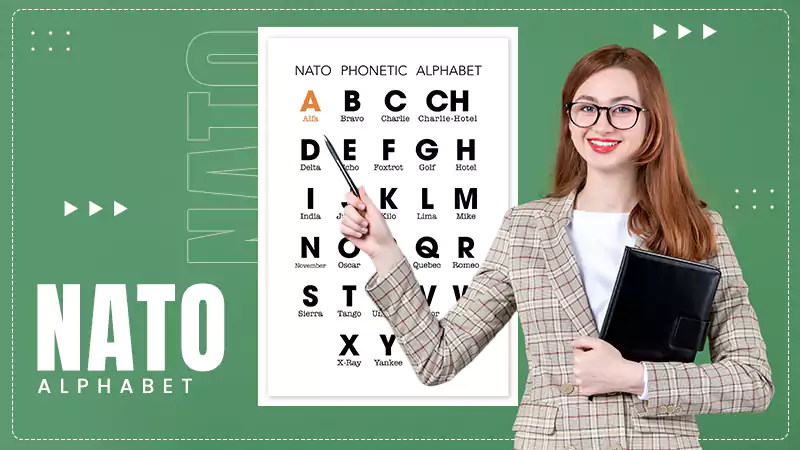
The NATO phonetic alphabet is a communication alphabet wherein each letter of the English alphabet corresponds to a specific word. The main purpose of the alphabet is to facilitate the transmission of alphabetic information over the telephone or radio.
NATO phonetic alphabet: Complete A-Z chart, meaning, and how to use it
You must have heard of words like alfa, bravo, charlie, or delta from different movies or plays. Although the military and navy have used it for a long time, you...
 Aakriti K
Published On: October 15, 2026
You must have heard of words like alfa, bravo, charlie, or delta from different movies or plays. Although the military and navy have used it for a long time, you may have wondered things like: What are these called? What does it mean, and why was it created when we can use simpler words?
In this guide, we are trying to answer every question and will tell you the function and the need of these words that tie to one particular letter.
What is the NATO phonetic alphabet?
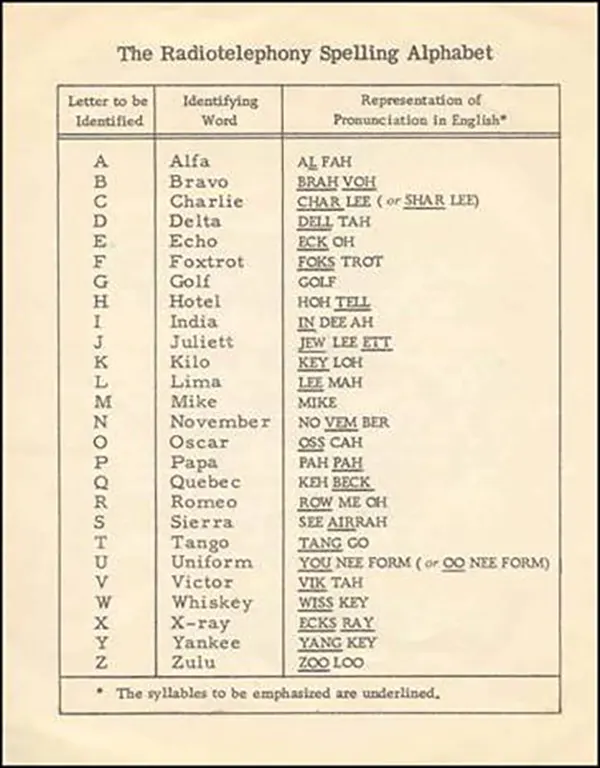
NATO phonetic alphabet is a standardized way of spelling that employs 26 code words for each letter of the English alphabet. The other names of this spelling system are the international radiotelephony spelling alphabet or the ICAO spelling alphabet.
It is used to communicate more smoothly over the radio or telephone. For example, suppose someone needs to inform others about the second route named route-b, but the receiver couldn’t get the b sound clearly, so the informer can use the word that is tied to the letter b, which is bravo, which helps make the message clearer because of the distinct sound of the word rather than of the letter b.
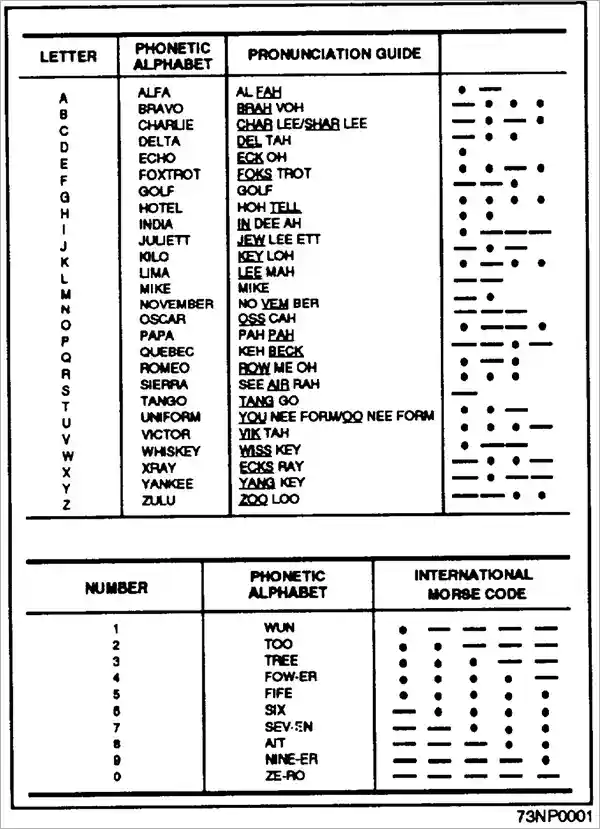
Complete NATO phonetic alphabet chart A-Z
| Letter | NATO code word | Letter | NATO code word |
| A | Alfa | N | November |
| B | Bravo | O | Oscar |
| C | Charlie | P | Papa |
| D | Delta | Q | Quebec |
| E | Echo | R | Romeo |
| F | Foxtrot | S | Sierra |
| G | Golf | T | Tango |
| H | Hotel | U | Uniform |
| I | India | V | Victor |
| J | Juliett | W | Whiskey |
| K | Kilo | X | X-ray |
| L | Lima | Y | Yankee |
| M | Mike | Z | Zulu |
Some spellings worth noticing:-
- Alfa, not alpha; the code word is generally written with an f.
- Juliett, with a double t
- X-ray, an X-assigned word needs to be with a hyphen in between.
How does the nato spelling work?
NATO spelling assigns a specific word to each letter of the English alphabet so the listener can reconstruct the original word after hearing the code words. For example, the spelling of a particular word “sam” will sound in the phonetic alphabet like Sierra Alfa Mike.
The receiver then clearly hears the name of the subject or anything over busy lines without repeating it again and again. Let’s discuss with some more examples:-
- Example 1: spelling of a name
Rita: Romeo India Tango Alfa
- Example 2: spelling an email address
Using phonetic words for names and “period” for a dot, and “at” for @, like this
For email address max@gmail.com – Mike Alfa X-Ray At Golf Mike Alfa India Lima Period Charlie Oscar Mike.
- Example 3: confirming a reference code
Think about an example where a customer support executive has to confirm the code “BVT”. Pronouncing “Bravo Victor Tango” will be more accurate than pronouncing the letters individually. This would help especially where a reference code has to be written down without any mistakes.
Why was the NATO alphabet created?
There once was a demand for radio and long-distance telephone communication that grew rapidly, and with that, smoother communication was needed to break the barrier of static background noise, weak signals, and differences in pronunciation, but there was no way at the time to fix that; one way could be to give certain codes, and even if someone had made it, it could not be recognised worldwide.
So, it was during the Second World War when the US, with its allies, started to work on it. One such system that was employed then is the American Joint Army/Navy Alphabet, which is also known as the Able Baker alphabet since Able and Baker are the first two words in the code.
To use it conveniently and internationally, ICAO (International Civil Aviation Organisation) revised it with attention, and the revised version was then finalised in the 1950s by NATO and became effective on 1 March 1956, which we use today.
Where is the NATO alphabet used?
The NATO Alphabet can be used anywhere when there is a need to pronounce letters precisely. Even though the NATO alphabet is named as such, it is not only used by the military.
- Military communication
Military personnel commonly communicate to transfer information or discuss it over radios or telephones, and at the time there should be no chance of miscommunication between them. Using a standard word for each letter reduces the chances of such situations where miscommunication could occur.
- Aviation
Whether you are a pilot, air traffic controller, or any aviation personnel, you need to communicate delicate or useful information where one wrong word may disrupt the flight or anything related; in such situations as well, these words can help specifically, even in an emergency.

- Sailing and maritime communication
Communication on boats or ships over radios can be windy or noisy; in such situations, these words can prove to be very effective for transferring information related to locations and all.
- Customer service and telephone calls
If you think you can not use these words as you are not someone from the military or navy, it can help people too who are living normal lives; it can be helpful when confirming somebody’s name, spelling the address, or explaining something useful to someone over calls.
- Technology and technical support
These words can also help those in technical support when dealing with product serial numbers, device identifiers, or account references; using these words helps reduce the mistakes that may occur.
How to use the NATO phonetic alphabet correctly
Once a wise man said, “Practice makes a man perfect,” and that is exactly what you need to do to get better at using these words; you just need to follow the following things:-
- Use the standard code words
- Speak clearly and at a steady pace
- Keep the letters in the correct order
- Explain what you are doing
- Separate words and pronunciation
- Confirm important information
Common mistakes to avoid when using the NATO alphabet
Somebody who is using these words for the first time needs to avoid some mistakes that people commonly make.
- Using unofficial substitutes
- Mixing up similar codes
- Speaking too quickly
- Forgetting the exact spelling
- Assuming everyone knows the system
- Skipping confirmation
There could be more mistakes, but to solve every mistake, there is only one solution that to consistently use these words in your daily life with people you often talk to.
Frequently asked questions about the NATO phonetic alphabet
What is the NATO phonetic alphabet?
What is the NATO alphabet used for?
NATO phonetic alphabet is used for spelling out names, places, codes, etc., when individual letters might not be understood well. It is connected with the military, aviation, sailing, and numerous telephone calls.
What is the difference between a phonetic alphabet and a spelling alphabet?
Phonetic alphabets typically represent speech sounds. The NATO system is actually a spelling alphabet since it uses whole words to denote written letters. Even though “spelling alphabet” is more accurate, the name used for this system is much better known.
Why is it spelled Alfa instead of Alpha?
The NATO code word is generally Alfa, with an “f.” The use of “f” makes pronunciations in various languages more consistent and reduces confusion with the pronunciation of “ph.”
What does “nato spelling” mean?
NATO spelling involves spelling a word by replacing each letter in it with the equivalent NATO code word. For instance, spelling S-A-M will give Sierra-Alfa-Mike.
Is the NATO alphabet only used by the military?
Not necessarily. Even though it is very military-related, it is also used in other circumstances where spoken letters are needed, such as aviation, marine communications, customer care, technical support, and so on.
Is the NATO phonetic alphabet a secret code?
No. It is simply a communication tool, not an encryption program. The reason for using it is to clarify the messages in the letters, and not to hide them from others.
How can I learn the NATO alphabet quickly?
Begin by practicing a few letters per day. You should spell out your name and some common words according to the table. Practicing short codes and cross-checking them with the table may help you memorize the code words.
Final thoughts
The NATO phonetic alphabet is an easy and effective way to spell out words orally in order to avoid misunderstanding. It consists of words that stand for individual letters to make oral spelling easy.
Regardless of whether you learn the NATO alphabet to navigate by sea, fly an airplane, use it at work, or even on the phone, the best way to start learning the NATO alphabet is to always have the A-Z chart at hand and practise as much as you can. You should stick to using the code words and talk at a moderate speed to avoid misunderstandings.
Related Blogs
 Sentence Case: Meaning, Rules, Difference with Title Case, and Examples
Learn what sentence case is, its capitalization rules and examples, and how it differs from title case, plus how to…
 How Many Pages Is 1000 Words? A Complete Words-To-Pages Guide
While writing an essay, school assignment, blog post, report, or script for anything, a question might strike your mind: how…
 Title Case: Rules, Meaning, and Examples for Correct Title Capitalization
Title case is a common style that we give to specific words based on the content, whether for titles of…