
There are some simple rules that include capitalizing the first word of a sentence, names of days, people, places, languages, nationalities, holidays, proper nouns, and the pronoun “I”.
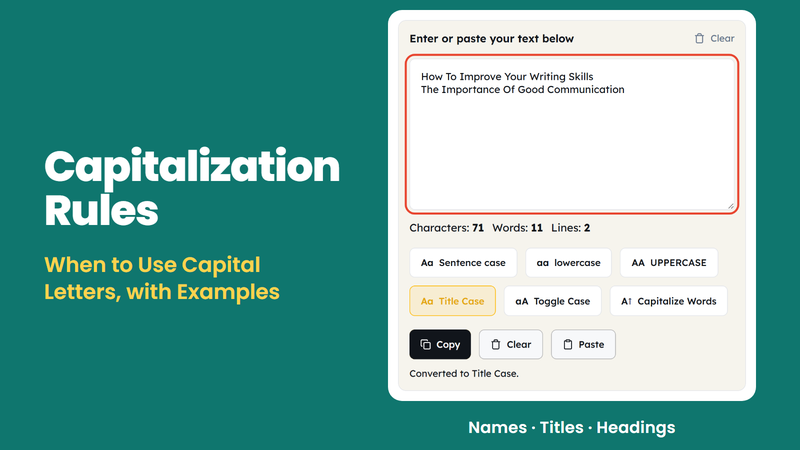
Capitalization Rules: A Complete Guide To Proper Capitalization In English
When writing in English, keep in mind that capitalization is an important part of writing, but not all words need to be capitalized. Today, we will explore the rules that...
 Aakriti K
Published On: November 23, 2026
When writing in English, keep in mind that capitalization is an important part of writing, but not all words need to be capitalized. Today, we will explore the rules that matter when writing and use examples to understand them better.
This guide will tell you when to capitalize, along with some mistakes that you should avoid while writing anything in English. Let’s get started…..
What Are Capitalization Rules?
There are certain writing conventions that state when a writer needs to use a capital letter instead of a small letter. In the English language, a capital letter is basically used at the beginning of a sentence, along with certain types of words like proper nouns and titles.
For example:-
- Correct: My brother lives in London.
- Incorrect: My brother lives in london.
Why Are Capitalization Guidelines Important?
It may feel like a small addition to your writing, but a true writer can understand the value of capitalization. Here are some reasons that can make you understand and give idea of its value.
- Makes writing easier to read
- Identifies proper names
- Creates a professional appearance
- Maintains consistency
- Helps communicate meaning
12 Important English Capitalization Rules You Should Know
- Always capitalize the first word of a sentence
Correct: Today is a beautiful day.
Incorrect: today is a beautiful day.
- Capitalize proper nouns
Example: She works for a company.
She works for Microsoft.
- Capitalize names of people
Example: Dr. Mehta, Albert Einstein, Marie Curie, Amit Shah, etc. - Capitalize names of countries, cities, and locations
Example: India, New Delhi, Asia, Mount Everest, Pacific Ocean, etc. Geographical terms like “mountains, rivers, country” are not automatically capitalized. - Capitalize days, months, and holidays
Example: Today is Monday.
November is the coldest month in India this year.
- Capitalize languages, nationalities, and religions
Example: She speaks Hindi and English.
My friend is French.
Hinduism is the third-largest religion in the world by the number of followers in 2026.
- Capitalize titles of books, movies, and other works according to the chosen style
Example of the name of a book with different styles:
The importance of good communication
The Importance Of Good Communication
- Capitalize the pronoun ‘ I ’
Example: I like reading books.
My brother and I went shopping.
- Capitalize the initialisms and acronyms
Examples: USA- United States of America
IIT- Indian Institute of Technology
UK- United Kingdom
ISRO- Indian Space Research Organisation
WHO- World Health Organisation
- Capitalize official names of organizations and institutions
Example: Harvard University, Google, Jio, Tata, etc. - Follow the correct capitalization in headings
For example,
Title case: How to Improve Your Writing Skills
Sentence case: How to improve your writing skills
- Capitalize words in direct quotations when required
Example: She said, “Today is a good day to learn something new.”
He described the experience as “a wonderful opportunity.”
What Words Should Not Be Capitalized?
- Common nouns
Correct: We visited a city.
Incorrect: We visited a City.
- Seasons
Correct: I love winter.
Incorrect: I Love Winter.
- General job titles
Correct: She is a doctor.
Incorrect: She is a Doctor.
- General directions
Correct: We travelled north.
Incorrect: We travelled North.
- Ordinary school subjects
Correct: I study mathematics.
Incorrect: I study Mathematics.
- General organisation references
Correct: The company is growing.
Incorrect: The Company is growing.
Capitalization vs Capitalisation: Is There A Difference?
There is no difference between these two words in terms of their meaning. Capitalization is the spelling used in American English, while capitalisation is used in British English, but both carry the same meaning, which is to use capital letters in the correct places.
Common Capitalization Mistakes To Avoid
Mistakes are not something you can escape; even professionals may sometimes fall into their traps, so to give you an idea, here are some mistakes you should avoid.
- Capitalizing every word in a sentence
- Writing proper nouns in lowercase
- Capitalizing common nouns
- Using inconsistent heading styles
- Forgetting to capitalize “I”
- Confusing title case with sentence case
How To Check And Correct Capitalization In Your Text
Whenever you decide to write something, you can not stop, or you cannot make every major word capital; it would cost you a lot of time with no guarantee that you made every possible major word capital.
In cases like these, a Case Converter can help you, specifically from ToolFlora. You can use it when:-
- You have accidentally written an entire paragraph in uppercase.
- You need to change lowercase text into uppercase.
- You want to convert text into title case.
- You need sentence-style capitalization for a paragraph.
- You want to make headings consistent.
- You are cleaning up copied text before publishing it.
Steps To Use ToolFlora’s Case Converter
- Open the ToolFlora Case Converter.
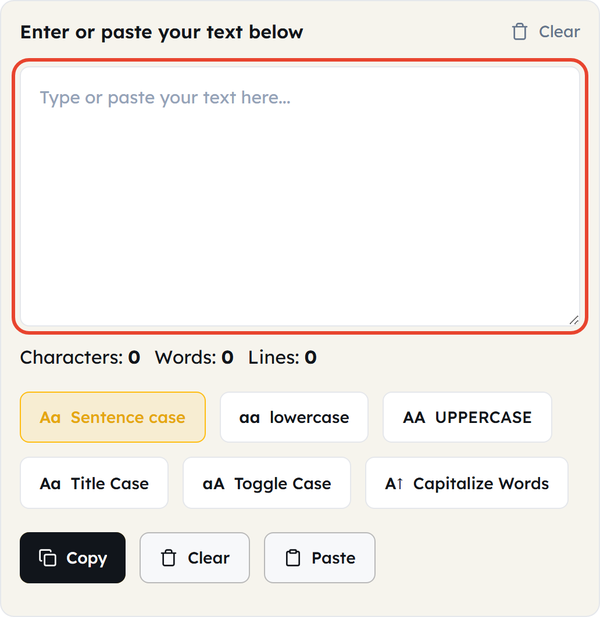
- Enter or paste the text you want to change.
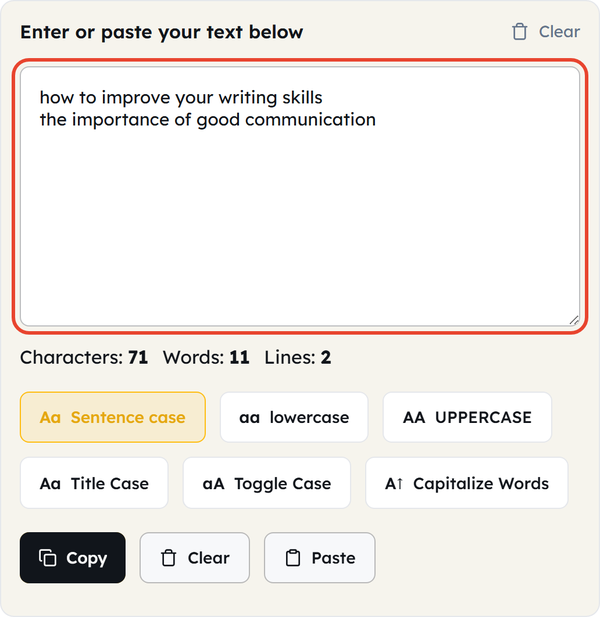
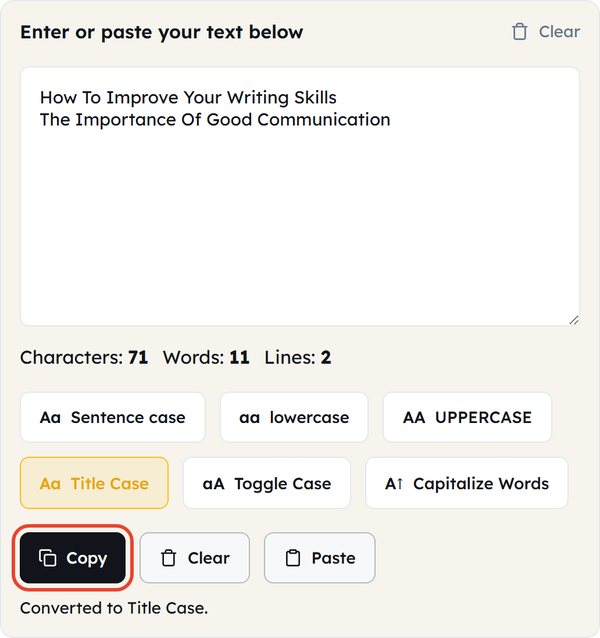
- Choose the required case format.
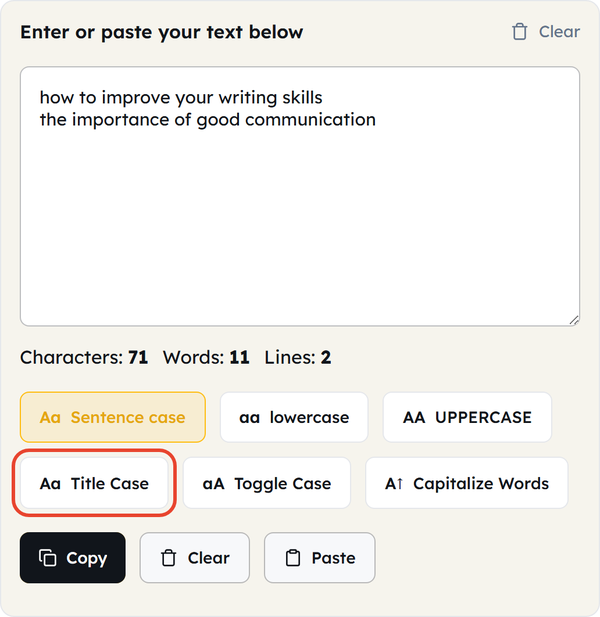
- Review the converted text.
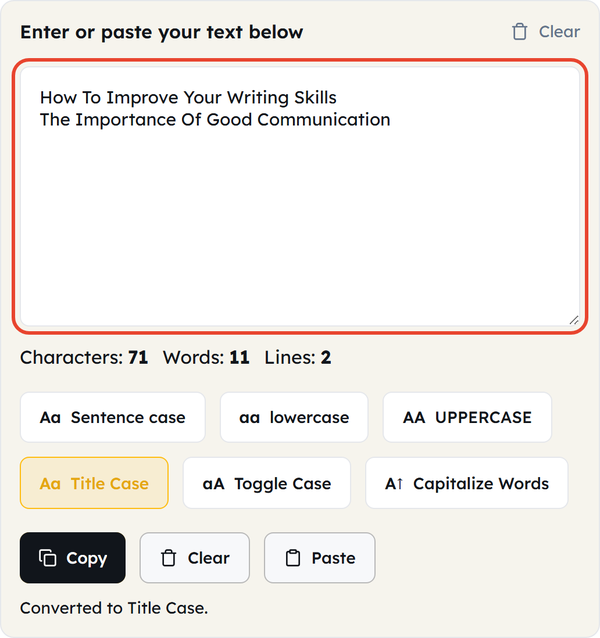
- Copy the result and use it in your document.
Capitalization Rules Checklist
- Every sentence begins with a capital letter.
- Names of places and people are capitalised.
- Countries, cities, or geographical names use proper capitalization.
- Days, months, or holidays begin with capital letters.
- Languages and nationalities are capitalized.
- The pronoun “I” is always capitalized.
- Acronyms and initialisms follow their established formats.
- Titles and headings follow one consistent style.
- Common nouns are not capitalized unnecessarily.
- The final text has been reviewed for inconsistent capitalization.
Frequently Asked Questions About Capitalization Rules
1. What are the basic capitalization rules in English?
2. What words should always be capitalized?
A sentence must start with a capital letter; pronouns like “I” and proper nouns like people’s names, cities, and countries must also be capitalized.
3. Should seasons be capitalized?
No. Seasons like spring, summer, fall, and winter are written in lowercase letters unless they come at the start of a sentence or are a part of a proper noun.
4. Are days and months capitalized in English?
Yes, all the days of the week and all the months of the year start with capital letters.
5. Should job titles be capitalized?
Formal job titles are capitalized if they precede names and if they are included in formal titles. The general job titles teacher, manager, and doctor, on the other hand, are not capitalized.
6. What is the difference between capitalization and capitalisation?
Both refer to the use of uppercase letters. Capitalization is the accepted American English version, whereas Capitalisation is the British English version.
7. Should every word in a heading be capitalized?
Not necessarily. It all depends on the kind of heading style used. Title case capitalizes major words, whereas sentence case usually capitalizes the first word.
8. Are school subjects capitalized?
The majority of the subject areas, like history, math, and science, are written in lowercase letters, while languages such as English and French are written with capital letters.
9. Why is capitalization significant?
Correct capitalization ensures that the writing is clear, recognizes names or titles, and provides a professional look to the document.
10. Does a case converter solve all the capitalization errors?
The case converter is able to change the letter case of the writing, but it is not guaranteed to recognize every proper noun or title in the document.
Conclusion
Knowing how to apply rules of capitalization will make your writing professional, consistent, and clear. The key rules are quite easy: capitalization should be applied to the beginning of sentences, proper nouns, personal names, languages, days, months, and the pronoun “I”. Everything else needs to be left uncapitalized.
Don’t forget about the differences between title case and sentence case, which serve different purposes and should be applied to your headings accordingly.
In case you need to correct the letter format of your already composed text, we recommend using ToolFlora Case Converter, which will make your task much easier.
Related Blogs
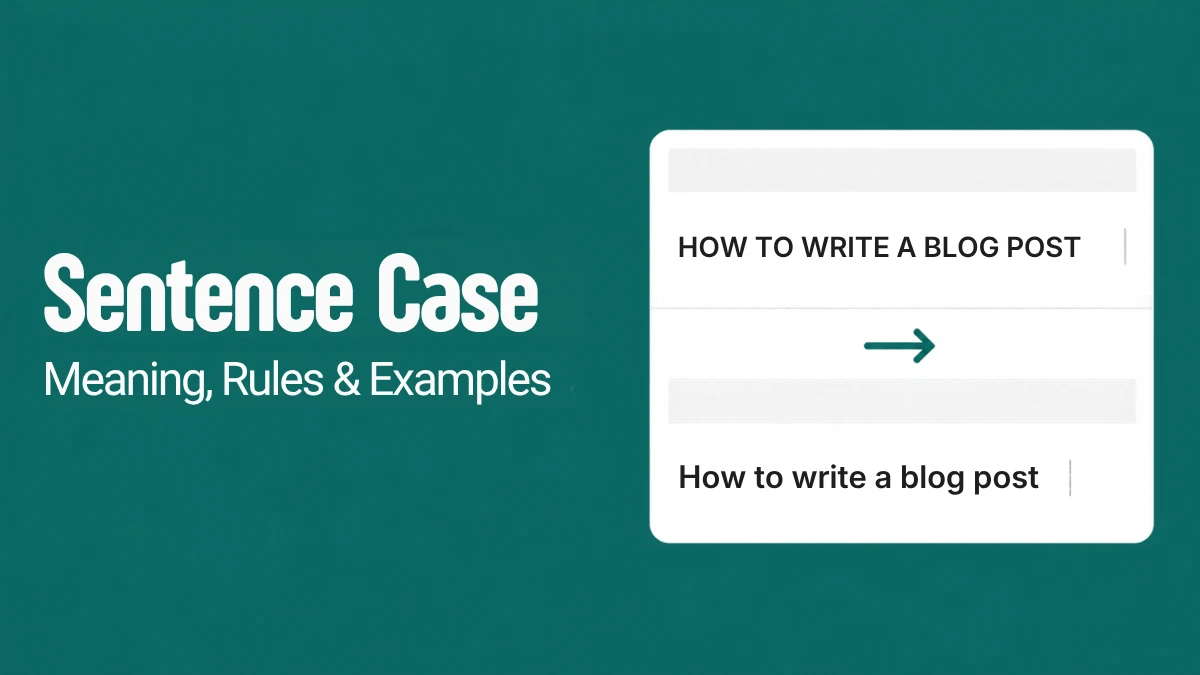 Sentence Case: Meaning, Rules, Difference with Title Case, and Examples
Learn what sentence case is, its capitalization rules and examples, and how it differs from title case, plus how to…
 How Many Pages Is 1000 Words? A Complete Words-To-Pages Guide
While writing an essay, school assignment, blog post, report, or script for anything, a question might strike your mind: how…
 Title Case: Rules, Meaning, and Examples for Correct Title Capitalization
Title case is a common style that we give to specific words based on the content, whether for titles of…