
SEO tools help you in review keyword usage, prepare metadata, check page previews, generate technical SEO markup, and perform other website optimization tasks. Each tool has a specific use, and results depend on how you use the tool.
Top 11 Best Seo Tools Available Online For Free
Once your website is ready to rank on search engines, you will need multiple SEO tools to help you get rankings, and targeting only search engine results pages doesn’t make...
 ToolHub Admin
Published On: September 22, 2026
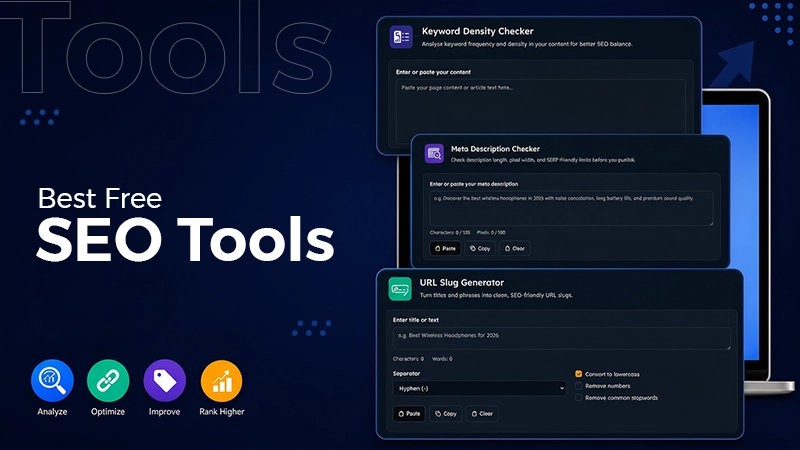
Once your website is ready to rank on search engines, you will need multiple SEO tools to help you get rankings, and targeting only search engine results pages doesn’t make full sense in 2026 unless AI is included in your target list. To help, Toolflora brings multiple SEO tools to make your work smoother.
Whether you are a writer, developer, marketer, or anyone in a related field, these tools will save you time so you can focus on other tasks.
Top Seo Tools You Should Try On Toolflora
Meta Title Checker
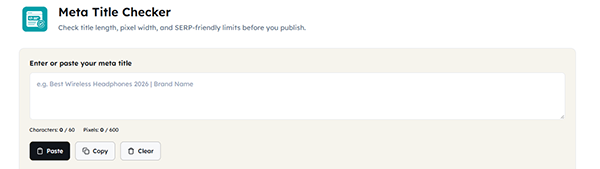
Your meta title describes your webpage, and its appearance can influence search engines and visitors. A poorly structured or overly long title may not look as intended.
Toolflora’s meta title checker helps you review and assess your title before publishing.
When to use it:-
- Before publishing a blog post or webpage.
- When reviewing title length and readability.
- When you want to check how important words appear in your title.
- While improving existing page titles.
Meta Description Checker
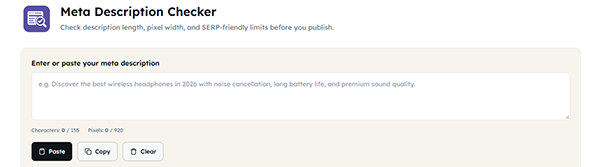
A meta description helps visitors and search engines understand the page in a short paragraph that communicates its purpose. It is not a factor on which ranking depends, but it encourages relevant clicks.
Toolflora’s meta description helps you with length and appearance, which helps you create a more representative meta description.
When to use it:-
- Writing descriptions for blog posts.
- Reviewing landing page metadata.
- Checking whether your description is clear and readable.
- Preparing descriptions for different pages on your website.
Try: https://toolflora.com/seo-tools/meta-description-checker/
Keyword Density Checker
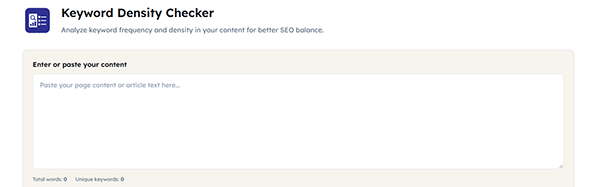
Using keywords in a healthy amount in your content is a natural part of ranking your webpage. However, repeatedly filling up your content with keywords can make it hard to read and lead to keyword stuffing.
The keyword density checker from ToolFlora lets you check the repetition of a particular word or phrase so you can fix it.
When to use it:-
- Reviewing keyword usage in blog posts.
- Checking repeated phrases in website content.
- Editing content for better readability.
- Identifying excessive repetition during SEO optimization.
URL Slug Generator
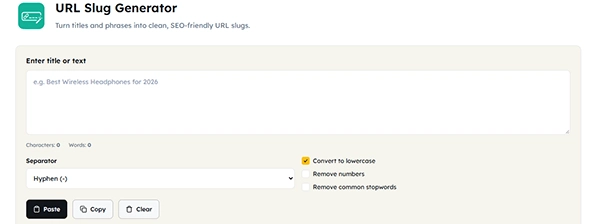
A URL slug is an important, readable part of the web address of a webpage that represents the identity of a particular page. It also makes management of multiple pages easier because each page has its own identity in its web address.
Toolflora helps you create a clean, readable, URL-friendly slug with its URL slug generator tool.
When to use it:-
- Creating URLs for new blog articles.
- Converting long page titles into readable slugs.
- Removing unnecessary words and spaces.
- Planning a consistent website URL structure.
SERP Snippet Preview
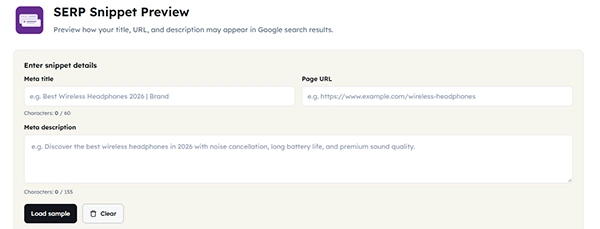
A SERP snippet preview tool helps you see your URL, meta title, and meta description together before publishing, so you can ensure it looks the way you want in search results.
You can preview it through Toolflora’s SERP snippet preview tool to avoid any messaging or formatting issues.
When to use it:-
- Reviewing a blog post before publication.
- Checking how your title and description work together.
- Comparing different metadata drafts.
- Preparing page snippets for clients or internal review.
Meta Tags Generator
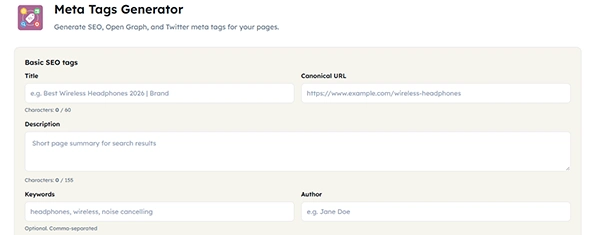
Meta tags help communicate information from webpages to browsers and search engines. You need several hours to prepare metadata for multiple webpages.
You need a tool to save time, and Toolflora brings you an easy-to-use meta tags generator tool that will generate essential meta tag markup for your webpage.
When to use it:-
- Setting up metadata for a new webpage.
- Preparing basic HTML metadata.
- Creating a starting point for page optimization.
- Reviewing information before adding it to your website.
Schema Generator
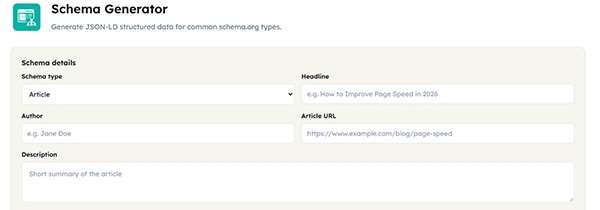
Schema markup helps communicate information about your webpage to search engines. It can be useful when preparing for schema-supported websites.
The Schema Generator on ToolFlora helps you create JSON-LD schema markup, giving you a starting point for your technical SEO work.
When to use it:-
- Preparing structured data for webpages.
- Creating JSON-LD markup.
- Supporting technical SEO implementation.
- Reviewing schema markup before adding it to your website.
Robots.Txt Generator
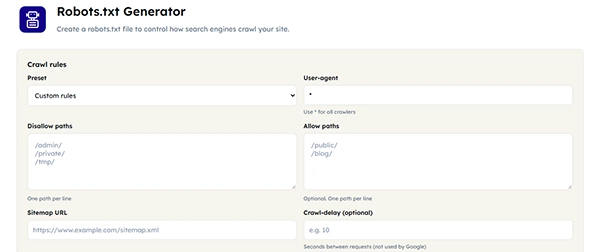
The robots.txt file lets search engines crawl the parts of your website you want. Sometimes unintentional mistakes stop crawlers from crawling; that’s where this tool proves to be useful.
ToolFlora’s Robots.txt Generator helps you prepare robots.txt rules for your website’s technical setup.
When to use it:-
- Need to prepare a robots.txt file for a website.
- Reviewing crawler access instructions.
- Planning technical SEO configurations.
- Creating an initial set of robots.txt directives.
Hreflang Generator
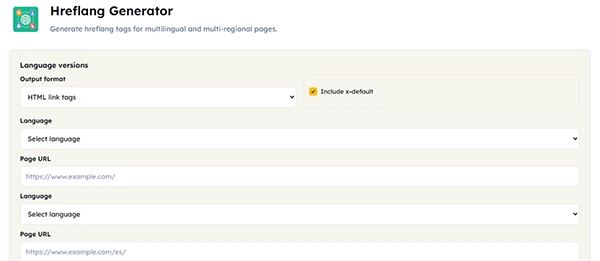
Hreflang helps search engines communicate in multilingual contexts based on the user’s preference or region.
Toolflora’s hreflang generator helps prepare markup for multiple languages or regions.
When to use it:-
- Managing multilingual websites.
- Preparing language-specific page variations.
- Setting up regional versions of content.
- Reviewing hreflang tags before implementation.
Open Graph Preview
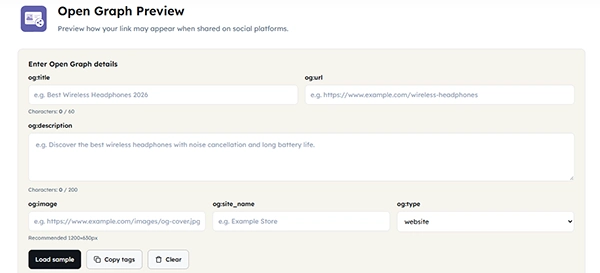
SEO isn’t the only reason to review your webpage metadata. When someone shares a link on a social platform, the displayed title, description, and image can affect how the shared content looks.
Open Graph preview on ToolFlora, you can preview the social data before posting a link.
When to use it:-
- Preparing blog posts for social sharing.
- Checking how a page’s sharing information is structured.
- Reviewing titles and descriptions for promotional campaigns.
- Checking social preview content before publishing.
UTM link builder
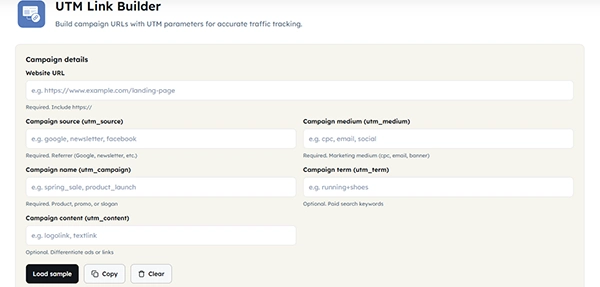
You may want to know where traffic comes from after you promote your website via social media, email, or any other form.
Toolflora’s UTM link builder identifies traffic in your analytics by adding campaign tracking parameters to your URLs.
When to use it:-
- Tracking links shared on social media.
- Creating URLs for email campaigns.
- Organizing marketing campaign traffic.
- Preparing trackable links for advertisements.
How To Choose The Right Tool For Your Tasks
| Your Task | Recommended Tool |
| Review keyword repetition | Keyword density checker |
| Create a readable page URL | URL slug generator |
| Check your page title | Meta title checker |
| Review your meta description | Meta description Checker |
| Prepare HTML meta tags | Meta tags generator |
| Preview a search result | SERP snippet preview |
| Preview social sharing | Open Graph preview |
| Generate structured data | Schema generator |
| Prepare crawler instructions | Robots.txt generator |
| Set up multilingual markup | Hreflang generator |
| Track market campaigns | UTM link builder |
Why Use ToolFlora’s Free Seo Tools?
You can find many tools online, but why waste your time when ToolFlora provides quality, easy-to-use SEO tools in one place, from previewing metadata to getting help with content, without installing or paying anything.
You can find every useful tool here, where you can perform different tasks related to SEO in one place with a convenient workflow and no automatic changes. One such example of a simple workflow of ToolFlora is:-
Plan your page
Choose the main topic and prepare a readable URL using the Keyword Density Checker and URL Slug Generator where relevant.
Prepare your metadata
Write a clear title and description, then review them using the Meta Title Checker and Meta Description Checker.
Preview the page
Use the SERP Snippet Preview to review how your title, URL, and description work together.
Handle technical SEO
If needed, prepare schema markup, robots.txt rules, or hreflang markup. Check the generated output before implementation.
Review and publish
Make sure your content is useful, your metadata is relevant, and your technical configurations fit your website.
Frequently Asked Questions
1. What are SEO tools used for?
2. Are ToolFlora SEO tools free?
Yes, ToolFlora provides free SEO tools to let you carry out your daily work with ease. Meta, Schema, Robots, and Previews are such examples.
3. Can SEO tools guarantee higher Google rankings?
No, SEO tools can help you prepare and review website elements, but as search performance depends on multiple factors, they cannot guarantee higher rankings. Try focusing on factors like content relevance, technical implementation, and search engine systems.
4. Does keyword density guarantee SEO success?
No, it doesn’t guarantee rankings, but if you use natural content that answers users’ needs, you may gradually gain seo success.
5. Why should I check my meta title before publishing?
A meta title checker can help you review the title’s presentation and visual fit. Google may still adjust your title link, so the tool should be treated as a review aid rather than a guarantee of the final search result.
6. Is a SERP preview the same as Google’s actual search result?
No. A SERP preview is an approximation. Search engines can change the appearance of titles, descriptions, and other search features based on the search query and device.
7. Do generated SEO codes update my website automatically?
No. ToolFlora’s generators help prepare code and information. You need to review the output and manually implement it on your website.
8. What is the use of an Open Graph Preview?
An Open Graph Preview helps you review how your webpage’s sharing information may appear on supported social platforms. The actual preview depends on the platform and its processing of the metadata.
9. Should I use every SEO tool for every page?
Not necessarily. Select tools based on your current task. For example, a blog writer may focus on titles, descriptions, keywords, and SERP previews, while a developer may also need schema or robots.txt utilities.
10. Can beginners use ToolFlora SEO tools?
Yes. The tools can support beginners with individual SEO tasks, but it’s important to understand what each tool does and review the output before using it on a live website.